Structural Drying in Issaquah, WA
After creek flooding or a pipe break, the water that shows is only part of the problem, and wet framing, subfloors and wall cavities need controlled drying until the meter agrees.
(888) 509-1696Get Issaquah structures dried- LGR dehumidifiers
- Daily moisture readings
- Drying logs for the adjuster
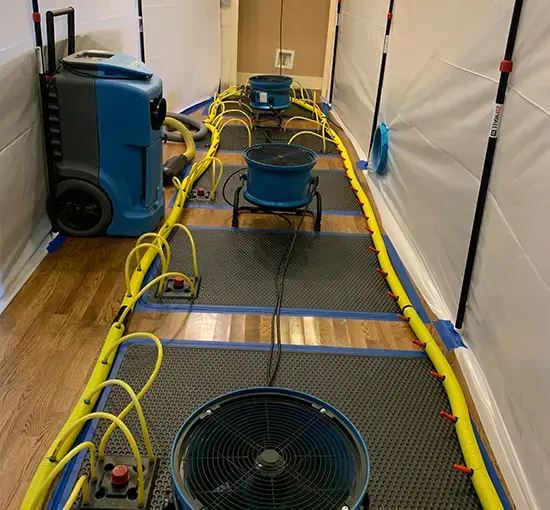
First steps for structural drying and dehumidification in Issaquah
- 1
Leave it running
Equipment should stay on and untouched.
- 2
Keep doors closed
Containment helps the machines work.
- 3
Expect readings
Meter checks steer each equipment change.
- 4
Save the logs
Ask for the final readings for the claim file.
How the crew handles structural drying and dehumidification in Issaquah
Drying is a measured process, not a matter of running fans. Equipment is chosen for the room, readings are taken from the start, and the job ends when wet materials read the same as a dry reference.
Water still moving in Issaquah?
(888) 509-1696Get the structure driedWhat does structural drying and dehumidification cost in Issaquah, WA?
In Issaquah, structural drying usually costs from $1,500 to $28,000, with the total depending on how many rooms are wet, how long equipment must run and whether hardwood or Class 4 materials are involved.
Ranges are typical, not a quote: the water category, square footage, material class and how fast drying started move the number most. Run the water damage cost calculator for a closer range.
A room or two
$1,500 to $4,500
- Air movers and LGR
- Daily readings
- Drying log
A full level
$4,500 to $11,000
- Wall cavity drying
- Subfloor drying
- More equipment
Dense materials or whole house
$11,000 to $28,000
- Desiccant drying
- Hardwood mats
- Extended monitoring
How structural drying and dehumidification is handled in Issaquah, step by step
Measure
Meters, thermometers and hygrometers set the starting record.
Place
Air movers, LGR units and containment match the wet area.
Monitor
Readings are logged each visit and equipment is adjusted.
Release
Equipment leaves when materials match dry references.
What gets measured
Moisture meters read wood, drywall and concrete, while thermometers and hygrometers track the air. Together they show whether the room is pulling moisture out of the structure, and they catch pockets of dampness that look dry, whether from a basement flood or a leak upstairs.
- Wood framing and subfloor
- Drywall and plaster
- Concrete slabs
- Air temperature and humidity
Equipment placed by the room
Air movers push dry air across surfaces, LGR dehumidifiers pull moisture from the air, and containment keeps the drying zone small so the machines work on the wet area alone. Hardwood floors may be fitted with drying mats, and wall cavities can be dried through small openings.
Equipment is repositioned as readings change, because the wettest spot on day one is rarely the wettest later.
Knowing when the structure is dry
No fixed number of days applies, because drying time depends on the materials, the water and the conditions. Final readings are compared with unaffected reference materials in the same home, and equipment is removed only when the numbers match. See water extraction in Issaquah for the stage before drying starts.
Trade fact: Drying that stops while a subfloor or wall plate still reads wet leaves moisture behind to cause problems, so the reference reading, not the clock, ends the job.
Structural drying and dehumidification across Issaquah and nearby towns
Drying crews cover Issaquah Valley, Olde Town, Central Issaquah, Issaquah Highlands, Talus and Montreux, plus Providence Point and North Issaquah, across ZIP codes 98027 and 98029, wherever creek water or a pipe break has wet the structure.
The same service nearby: structural drying and dehumidification in Sammamish, Bellevue, Redmond.
Related water damage services in Issaquah
How long does structural drying take?
Time depends on the materials and the water, so meters set the finish line, and the machines come out only when readings match dry reference points.
Why does equipment run when the room feels dry?
Surface dryness is not the same as structural dryness. Framing, subfloors and concrete can still hold moisture.
Are LGR dehumidifiers different?
They pull more moisture from the air at lower humidity than standard units, which suits drying dense or damp materials.
Can hardwood floors be dried?
Often, with drying mats and controlled conditions, though badly cupped or soaked boards may need replacement.
Why are readings logged every day?
Daily logs show the drying trend and steer equipment changes, and they give the adjuster proof the work followed the IICRC S500 standard.
Is drying needed after extraction?
Yes. Extraction removes standing water, but wet framing, subfloors and wall cavities need equipment to release what they absorbed.
Wet walls or floors after creek flooding in Issaquah? Meters show what is left.
Air movers, LGR dehumidifiers and daily readings dry the framing until it matches dry references, with logs for the claim.
Sammamish, WA · King County · open 24/7