Structural Drying and Dehumidification in Redmond, WA
Redmond's cool, wet winters keep damp materials damp longer. The crew sets air movers and dehumidifiers, reads the framing and subfloor each day and stops only when the readings match a dry reference.
(888) 509-1696Get the building dried- LGR dehumidifiers
- Daily psychrometric logs
- Moisture mapping
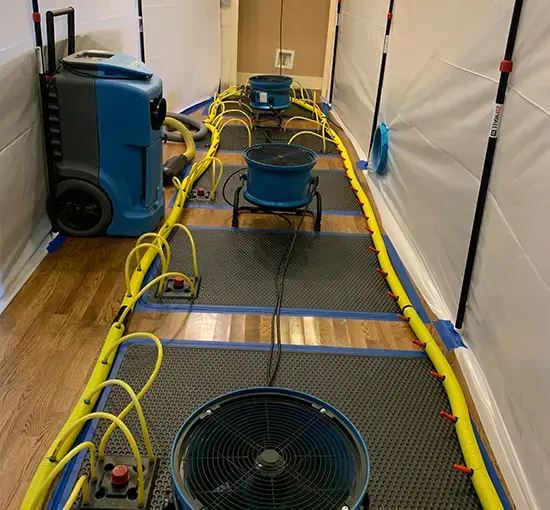
First steps for structural drying and dehumidification in Redmond
- 1
Pump first
Standing water has to go before drying starts.
- 2
Close doors
Closed rooms dry faster and more evenly.
- 3
Leave units on
Turning them off early leaves framing damp.
- 4
Expect daily checks
Readings show how the drying is going.
How the crew handles structural drying and dehumidification in Redmond
Drying is not just running fans. It is a measured process: the crew balances airflow and humidity, checks framing and floors with meters and records the numbers, so nothing is left damp behind a finished surface.
Water still moving in Redmond?
(888) 509-1696Schedule the dryingWhat does structural drying and dehumidification cost in Redmond, WA?
Structural drying in Redmond runs $1,500 to $4,500 for one or two rooms. Several rooms or a full level reach $4,500 to $11,000, and Class 4 or whole-house drying runs $11,000 to $28,000.
Ranges are typical, not a quote: the water category, square footage, material class and how fast drying started move the number most. Run the water damage cost calculator for a closer range.
One or two rooms
$1,500 to $4,500
- Air movers and LGR
- Daily readings
- Psychrometric log
Several rooms or a level
$4,500 to $11,000
- Wall cavity drying
- Subfloor drying
- More equipment
Class 4 or whole house
$11,000 to $28,000
- Desiccant drying
- Hardwood mats
- Extended monitoring
How structural drying and dehumidification is handled in Redmond, step by step
Map
Meters and a thermal camera mark every wet surface.
Set
Air movers and dehumidifiers are placed to move air across wet materials.
Read
Daily readings track temperature, humidity and moisture content.
Release
Equipment goes once readings match the dry reference.
Why drying runs longer in Redmond winters
Redmond has cool, wet winters, and cool air holds less moisture, so materials release water slowly. Dehumidifiers pull it from the air, while air movers keep fresh, dry air moving over wet surfaces.
- LGR dehumidifiers for humid air
- Air movers on floors and walls
- Cavity drying for wall bays
- Mats for hardwood floors
Daily readings, not guesses
Each visit records temperature, humidity and moisture content in the same spots, building a psychrometric log. Equipment is moved or removed as the readings improve, so energy is not wasted on areas that are already dry.
A dry reference reading is taken from unaffected material in the same house, and the wet material has to reach it. Water extraction should come first when standing water is present.
Hardwood, subfloors and wall cavities
Hardwood can cup if dried too fast, so mats and a slow, controlled pace protect it. Subfloors and wall bays often need small holes or removed baseboards so air can reach the framing.
When the water is from sewage or runoff, drying only starts after removal; see sewage backup cleanup.
Structural drying and dehumidification across Redmond and nearby towns
Drying crews work across Redmond ZIP codes 98052 and 98053, including Downtown, Overlake, Education Hill, Grass Lawn, Idylwood, Bel-Red, Sherwood, English Hill, Redmond Ridge and the Sammamish Valley.
The same service nearby: structural drying and dehumidification in Sammamish, Kirkland, Bellevue.
Related water damage services in Redmond
How do crews know the house is dry?
Readings from the wet materials are compared with a dry reference from the same house. Dry is a number, not a feeling.
Why is the equipment so loud?
Air movers and dehumidifiers run all day to move air and pull moisture out, and the noise is a sign that drying is working.
Can hardwood floors be dried?
Often, with mats and controlled airflow. Badly cupped boards may need replacing once drying ends.
Does drying prevent mold?
It removes the moisture mold needs, which is why starting early matters.
How long does it take?
Three to seven days is common, with cool winter weather adding time. Thick materials take longer.
Will the power bill rise?
Yes, since equipment runs around the clock. Ask your insurer whether the cost is included in the claim.
Redmond materials stay wet longer in winter. Get them measured and dried.
Damp framing and subfloor lead to swelling and odors until readings return to a dry reference.
Sammamish, WA · King County · open 24/7