Issaquah sits in a valley at the south end of Lake Sammamish, with the Issaquah Alps around it, and Issaquah Creek is the local flood driver. The city uses four flood phases tied to the creek gauge, so residents can tell how serious a rise is. This post explains the phases, the floods that set the benchmark, and what a flooded home does first before extraction and drying begin.
Key takeaways
- The city flood phases run from Phase I at 6.5 feet to Phase IV at 9.0 feet on the Issaquah Creek gauge.
- Phase II brings localized flooding in flood prone areas with some street closures, and Phase IV is extensive flooding like January 2009.
- Creek water is Category 3, so people stay out of it and porous materials are not kept.
- Clearing storm drains near the home and moving valuables up are the best moves before water arrives.
- Extraction comes before any drying starts, and lower levels need the most attention.
How the city describes creek flooding
Issaquah uses four flood phases tied to the Issaquah Creek gauge. Phase I starts at 6.5 feet and Phase IV is reached at 9.0 feet.
The city flood phases cover Issaquah Creek, Tibbetts Creek and the East Fork of Issaquah Creek. Phase II brings localized flooding in flood prone areas with some street closures, and Phase IV is extensive flooding comparable to the January 2009 event.
NOAA gauge notes say flooding covers low valley areas, homes, businesses and roads including Newport Way.
What each phase can mean at the front door
The phases are a public signal, not a promise about any one address. They tell residents how serious the creek is running, and the same rise can look very different from one street to the next.
At the lower phases, the main risk is a flooded yard, a wet garage or a closed road. At Phase IV, the city describes extensive flooding on the scale of January 2009.
- Phase I: the creek is rising at 6.5 feet on the gauge, and drains near the home deserve a look.
- Phase II: localized flooding in flood prone areas, with some street closures.
- Phase IV: extensive flooding at 9.0 feet, comparable to January 2009.
- Gauge watching: the Issaquah Creek gauge is the number the city ties its phases to.
The floods that set the benchmark
In January 2009 Issaquah Creek had a major flood that the city still uses as its benchmark for Phase IV.
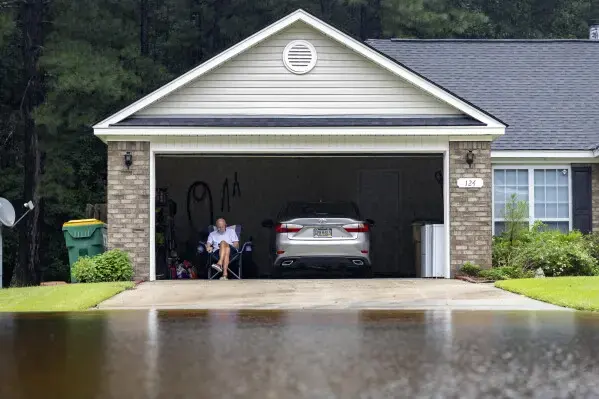
On February 6, 2020, the creek reached Phase 4 and measured 2,450 cubic feet per second, the highest reading in the years after the January 2009 flood. Water spilled onto Front Street and Newport Way.
During that flood the city opened a sand and bag station at its community center, Eastside Fire searched apartments for people who could not evacuate, and classes started late. On December 11, 2025, during the regional atmospheric river floods, residents along Issaquah Creek used pumps as water filled yards.
- January 2009: the benchmark flood for Phase IV.
- February 6, 2020: Phase 4 at 2,450 cubic feet per second, the highest reading after the 2009 flood.
- December 11, 2025: pumps running in yards along the creek.
First steps before extraction and drying
The first moves happen before the water gets in. The city asks residents to keep storm drains near their homes clear of leaves and debris to limit localized flooding.
If water is already inside, safety comes next. Shut off power only if the panel is dry, and stay out of standing water.
- Clear drains: keep storm drain grates near the home clear of leaves and debris.
- Lift valuables: move electronics, papers and keepsakes to higher shelves.
- Photograph first: take pictures of the water level and the damage before cleanup starts.
- Stay out of the water: it can hide debris and carries contamination.
Apartments, shared walls and neighbors
In the February 2020 flood, Eastside Fire searched apartments for people who could not evacuate. Issaquah has apartment communities where water in one unit can spread to nearby units.
For a renter or a manager, the first steps are the same, with one addition: tell the property manager early and photograph shared spaces as well as the unit.
- Report quickly: tell the manager as soon as water is seen.
- Photograph shared areas: hallways, stairwells and parking spaces can matter for records.
- Keep contact lists: note which neighbors have water too.
Why creek water is Category 3
Creek water picks up soil, fuel, fertilizer and sewage on its way across yards and streets. That puts it in Category 3, the most contaminated class of water.
Because the water is dirty, porous materials that soaked it up are not saved. Issaquah storm and flood cleanup removes carpet, pad and wet insulation, and cleans hard surfaces.
The crew works in protective gear and bags wet material for disposal. Hard surfaces and framing are cleaned and treated before drying begins.
- Removed: carpet, pad, soft furnishings and wet insulation.
- Cleaned: concrete, tile, studs and solid wood trim.
- Treated: surfaces that touched creek water get an antimicrobial treatment before they dry.
Lower levels and low spots
Issaquah sits in a creek valley below the Issaquah Alps, so runoff after an atmospheric river can reach lower floors. Where a home has a lower level, it is usually the first place water collects.
Basement water damage in Issaquah work starts with pumping the water out and then checking walls, slab and finishes with meters.
- Garages and ground floors: water enters at door thresholds and low vents.
- Finished lower floors: carpet, pad and wall board are the first to soak.
- Mechanical areas: water heaters and furnaces need to be checked before they are restarted.
After the water: mud, mechanical equipment and odors
Once the creek drops, it leaves silt on floors and in low spaces. The silt holds moisture and carries the smell of creek water, so it is cleaned out along with the wet materials.
A furnace, a water heater or an electrical panel that sat in floodwater should be checked by a professional before it is switched on again.
- Silt: removed from floors, cabinet bases and low corners.
- Appliances: inspected before use.
- Odors: treated at the source by removing the porous material that holds them.
Extraction first, then drying
Standing water comes out before any drying equipment goes in. Issaquah water extraction uses pumps and truck mounted extractors to lower the water and let the crew see the floor.
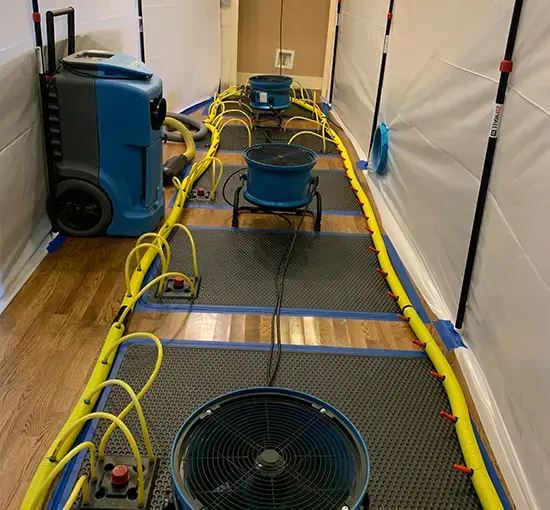
After the water is gone, flood cuts open the walls above the water mark. Air movers and dehumidifiers then dry the framing and subfloor until readings match a dry reference.
No local drying times are promised, because each home reads differently.
- Water pumped or extracted from floors and low spaces
- Carpet, pad and soaked insulation removed and bagged
- Wall cavities opened above the water mark and cleaned
- Framing and subfloor dried and checked with meters
Questions
What do the Issaquah flood phases mean for a homeowner?
They show how high Issaquah Creek is running. Phase II brings localized flooding in flood prone areas, while Phase IV means extensive flooding like January 2009.
Is creek floodwater safe to walk through?
No. It is Category 3 water that can carry sewage and chemicals, and it can hide debris underfoot.
Should storm drains near the house be cleared?
Yes. The city asks residents to keep storm drains near their homes clear of leaves and debris to limit localized flooding.
Can carpet that soaked up creek water be dried and kept?
Usually not. Porous materials that sat in Category 3 water are removed rather than dried.
Where can residents see more about Issaquah water work?
The Issaquah page lists the services available in town.