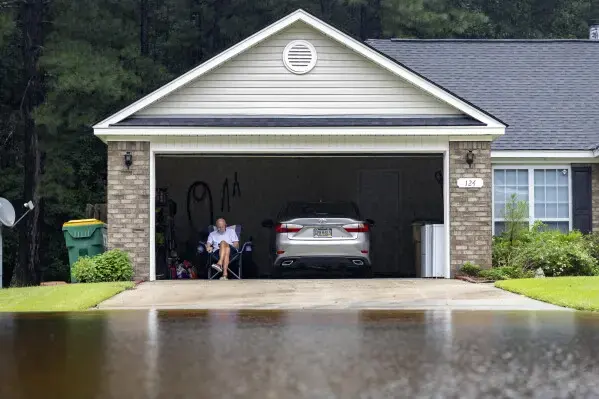
Duvall sits on a hillside above the Snoqualmie River, and the valley floods from late fall to early spring. When river water or hillside runoff reaches a house, the first day decides how much of it can be saved. This post walks through safety, what to photograph and what comes out first, with notes from the December 2025 flood that the valley is still talking about.
Key takeaways
- Floodwater is Category 3, so people, pets and children stay out of it and porous materials are not kept.
- Photograph damage before anything is moved, because records support the claim later.
- Power, gas and the main water valve are handled first, and only when the panel and floor are dry.
- Carpet, pad and the lower wall board come out early, and framing is dried with meters afterward.
- Roads can be cut off for 2 or 3 days, so a plan for waiting matters as much as the cleanup.
What the December 2025 flood showed Duvall
Governor Bob Ferguson declared a state of emergency on December 10, 2025, ahead of historic river flooding. The next day the Snoqualmie River at Carnation peaked at 60.76 feet, with a flow near 90,000 cubic feet per second.
It was the worst flood in the valley since January 2009, when the Carnation gauge reached 62.21 feet. A Duvall farmer said high king tides backing up the river combined with the atmospheric river to flood the town.
The city plan says flooding occurs one to multiple times a year and expects atmospheric rivers to grow more frequent and more severe.
Where the water comes from matters
About 138 acres, or 8.6 percent of Duvall, lie in the Snoqualmie River floodplain, mostly city owned open space. The city rates direct river flood risk to city structures as very low, and one repetitive loss property exists in town.
Most of Duvall is built on a hillside that slopes up from the river. That means a home can take water from the river, from hillside runoff or from saturated soil in the wet season, and each source leaves a different mess.
The city plan also cites steep slopes, saturated soils and glacial sediments as drivers of landslide risk, and describes limited stormwater infrastructure and aging culverts. After days of rain, water finds its own way, and a house low on a slope can see it arrive from uphill rather than from the river.
- River water: arrives slowly, carries silt and sewage, and leaves a mud mark on the walls.
- Hillside runoff: arrives fast after heavy rain, often through a door, a window well or a garage.
- Saturated ground: seeps up through a slab or in at a wall and can keep coming for a while.
What river water leaves behind
Even after the water drops, the river leaves a film of silt on everything it touched. The silt hides in cabinet bases, door tracks and the gaps around baseboards.
It also settles into heating and cooling ducts and around appliances. A furnace or water heater that sat in floodwater should be checked before it is switched on.
- Silt: fine mud that dries into a crust and holds moisture against wood.
- Odor: river water leaves a sour smell that lingers in porous materials.
- Appliances: refrigerators, washers and mechanical equipment need inspection before use.
- Ducts: silt in ductwork can be blown through the house once the system runs.
The first steps inside the house
Safety comes before cleanup. Floodwater and electricity do not mix, and standing water can hide broken glass and hazards underfoot.
Shut off the power at the panel only if the panel is dry and the floor around it is dry. If water has reached outlets or the panel, leave it alone and ask for help from the utility or an electrician.
- Stay out of water: contact can carry bacteria into cuts and onto skin.
- Photograph everything: take wide shots and close ups of the water level, the furniture and the wall damage.
- Lift what can be lifted: move small valuables and papers to dry upper shelves.
- Skip the household vacuum: it is a shock risk and pulls contaminated water into the motor.
Why floodwater is treated as Category 3
River and runoff water picks up soil, fuel, sewage and animal waste on the way in. The industry treats that as Category 3, the most contaminated class of water.
Because the water is dirty, porous materials that soaked it up are not saved. The crew works in protective gear, and wet material is bagged and removed.
What gets thrown out
Carpet, pad, insulation and soft furnishings that sat in the water are discarded.
- Carpet and pad
- Wall insulation below the water mark
- Particleboard cabinet bases and similar soft materials
What can be cleaned
Hard surfaces, framing and solid wood can be cleaned, treated and dried.
- Studs and plates
- Concrete and tile
- Solid wood trim in good shape
What comes out first
Standing water goes first. Extraction through truck mounted equipment or pumps lowers the level so the crew can see the floor.
Duvall water extraction is the opening step because the longer water sits, the further it wicks up the walls.
Next comes carpet and pad, then the lower part of the wall board. A flood cut removes drywall a set height above the water mark so wet insulation behind it can be pulled.
With the structure open, the crew moves on to cleaning and then drying. The storm and flood cleanup crew in Duvall follows the same order after every river event.
Drying, records and waiting out closed roads
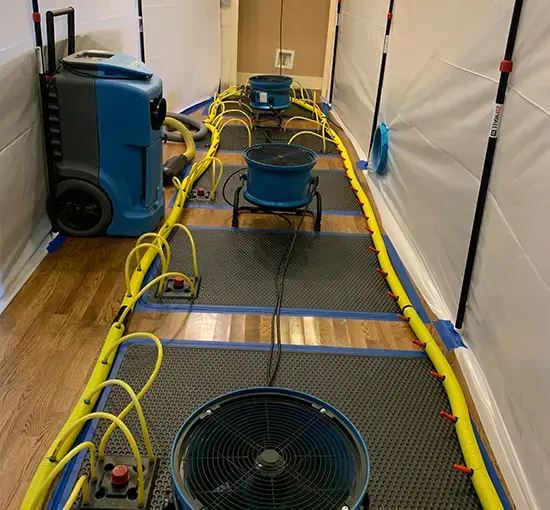
Moisture meters check the framing, the subfloor and the slab. Air movers and dehumidifiers run until readings match a dry reference.
Plan for the wait. Closed roads do not stop the water from soaking into the floor, so the work done inside the house in the meantime counts.
All major routes into and out of Duvall cross the Snoqualmie River floodplain, and flooding can cut the city off from land routes for up to 2 or 3 days. King County runs a flood warning gauge on the river at Duvall, and the city once opened a shelter for people trapped by a flood.
While roads are closed, the useful work is documentation: photos, a list of damaged items and notes on how high the water reached. Keep them with the claim paperwork.
- Move what is safe to move: lift furniture legs onto blocks and raise boxes off a wet floor.
- Watch the gauge: the King County gauge at Duvall shows what the river is doing.
- Keep records: save photos, dates and any notes about the water level.
- Plan the dry out: once roads reopen, extraction and drying can begin without delay.
Questions
Is river floodwater in a Duvall house really Category 3?
Yes. River water and runoff carry soil, sewage and other contaminants, so porous materials that soaked it up are removed rather than dried.
Can wet carpet from a river flood be saved?
Usually not. Carpet and pad that sat in Category 3 water are discarded, and hard surfaces are cleaned and dried.
Does a house on the Duvall hillside still face flood risk?
It can. Hillside runoff and saturated soil can bring water in even when the river stays in its banks.
What should be photographed before cleanup begins?
Take wide shots of each room, close ups of the water level on the walls and photos of damaged furniture and appliances.
Who else should be told about a flooded house?
The insurance company is first, and then any lender or landlord. The Duvall page explains how flood work is organized in town.