Crawl Space Water Damage in Kirkland
Water that pools under a Kirkland house rarely drains on its own. Crews pump the space, pull soaked insulation and dry the joists and subfloor before wood stays wet.
(888) 509-1696Call a Kirkland crawl space crew- Pump-out first
- Joist moisture readings
- Dehumidifier drying
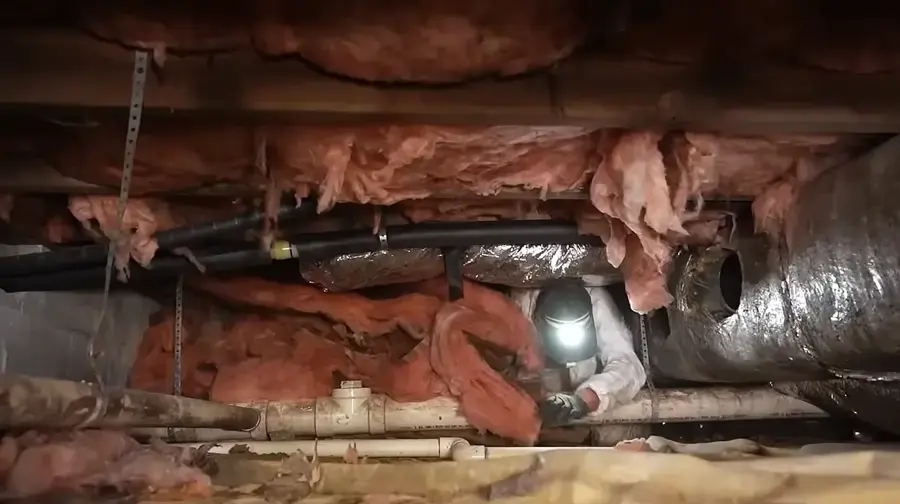
First steps for crawl space water damage in Kirkland
- 1
Stay out
Do not enter a flooded space without checking for power cables near the water.
- 2
Close the main
Shut the main water valve if a pipe could be the source.
- 3
Smell for sewage
A sewer odor means the water may be contaminated, so avoid contact.
- 4
Call for drying
Request pump-out and moisture readings before wood absorbs more.
How the crew handles crawl space water damage in Kirkland
A flooded crawl space is easy to miss because nobody walks through it. In Kirkland, where the city says fine soils slow infiltration and raise runoff, water can sit under a house long after the rain has stopped.
Water still moving in Kirkland?
(888) 509-1696Book a crawl space pump-outWhat does crawl space water damage cost in Kirkland, WA?
Crawl space jobs in Kirkland depend on the water depth, the amount of insulation soaked and whether the water was clean or contaminated. Access and the size of the space also shape the final scope.
Ranges are typical, not a quote: the water category, square footage, material class and how fast drying started move the number most. Run the water damage cost calculator for a closer range.
Pump-out then drying
$1,500 to $4,000
- Pump clears the water
- Fans and dehumidifier set
- Meter readings daily
Wet insulation and barrier
$4,000 to $9,000
- Soaked batts bagged
- Torn barrier cut away
- Joists dried
Runoff or months of water
$9,000 to $20,000
- Contaminated water protocol
- Antimicrobial treatment
- Long drying run
How crawl space water damage is handled in Kirkland, step by step
Inspect
Meters read joists and subfloor while the space is checked for entry points.
Pump out
Submersible pumps clear water, then soaked insulation is cut free.
Dry framing
A dehumidifier and air movers work the enclosed air.
Verify
Joists and subfloor must match dry reference readings.
Why water lingers under Kirkland floors
Type C sandy clay loam is the predominant soil in the city, and basins such as Moss Bay and Kirkland Slope are mostly clay that drains poorly. Yarrow Creek has Type D soil that does not infiltrate at all. Heavy rain has few places to go.
Which homes have crawl spaces by neighborhood is not tracked here, so this applies wherever one exists. The first check is always the same:
- Standing water depth and where it enters
- Insulation sagging or falling between joists
- Vapor barrier lifted or pooled with water
- Wet joists and subfloor from below
Removal and drying
Pumps clear the standing water, then wet batts and the damaged vapor barrier are cut out. Joists and subfloor are dried with air movers and a dehumidifier sized for the enclosed space.
If the water carried soil or sewage, the work follows Category 3 handling with antimicrobial treatment before drying starts.
Stopping the next round
After the dry-out, the crew notes where water entered, whether from a pipe, a drain or runoff, so the owner can fix the source before new insulation goes in. A cleared gutter and a grade that slopes away from the house help more than most people expect.
If sewage or a sewer odor is involved, the job shifts to sewage backup cleanup rules with containment first, and equipment details are on the structural drying page.
Crawl space water damage across Kirkland and nearby towns
Crawl space crews respond across Kirkland neighborhoods from Totem Lake to Central Houghton, Juanita and Finn Hill, serving every home with a space under the floor in ZIP codes 98033, 98034 and 98083.
The same service nearby: crawl space water damage in Sammamish, Redmond, Bellevue.
Related water damage services in Kirkland
Can I tell if my crawl space is wet?
Musty air, sagging insulation or soft spots in the floor above are signs. A moisture meter reading on the joists confirms it.
Is wet insulation always removed?
Soaked batts hold water against the wood and rarely dry in place, so they usually come out. Lightly damp pieces are judged by meter.
Does the vapor barrier get replaced?
Torn or soaked barrier is cut out, and a new one goes in after the space is dry and the source is fixed.
What if the water smells like sewage?
That points to a sewer problem, and the space is treated as Category 3 with containment and antimicrobial work.
Will drying stop future water?
Drying fixes the damage, not the entry point, so the source such as a drain or leaking pipe still needs repair.
Can I do any of this myself?
Pumping a shallow puddle is possible, but wet wood and insulation need meters and equipment to dry safely.
Dry the framing before it stays wet
Crews pump the space, remove soaked insulation, dry the joists and subfloor, and log every reading and photo for the insurance file.
Sammamish, WA · King County · open 24/7