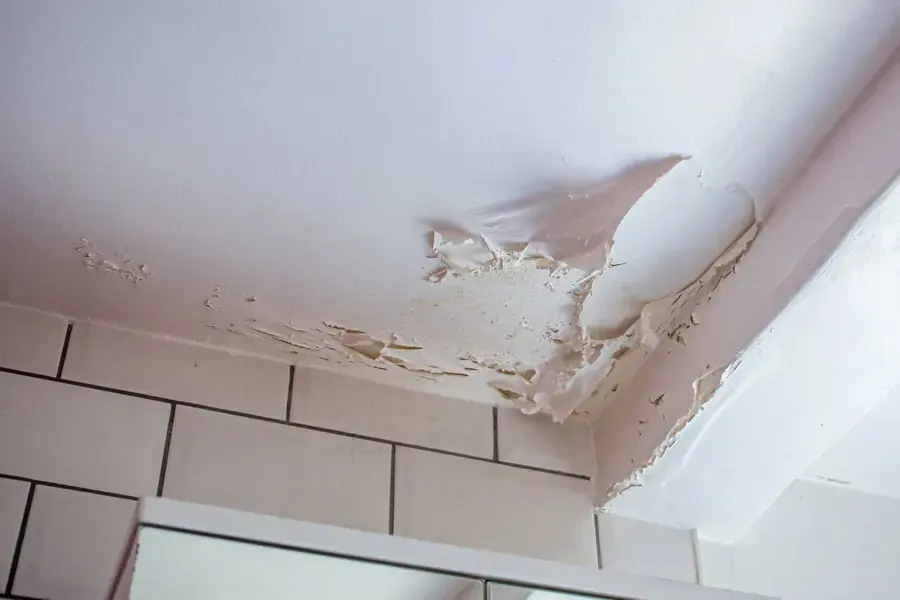
Large two story wood frame homes are common on the Sammamish Plateau, and the laundry room or a bathroom is often upstairs. When a washer supply hose or a bathroom fixture leaks, the water moves through the floor system and shows up as a stain in the ceiling below. This post traces that path and explains how the damage is dried.
Key takeaways
- A stain on the ceiling means water has already been inside the floor system for some time.
- Close the washer shutoff valves or the main water valve first, then stop using the fixture.
- A ceiling that looks dry can still be wet above, so meter readings matter more than appearances.
- Drywall is opened where it is wet, and joist bays are dried with air movers and dehumidifiers.
- Washer and ice maker supply hoses are common sources, so checking them is cheap prevention.
How an upstairs leak reaches the ceiling below
Most homes on the plateau were built out from the 1980s through the 2000s, and large two story layouts are typical. That puts laundry rooms, bathrooms and sometimes kitchens above finished living space.
A leak at an upstairs fixture runs along the subfloor, down through gaps around pipes and into the joist bays. By the time a brown stain shows below, water has been spreading for some time.
- Washer supply hoses that crack, bulge or loosen at the valve
- Washer drain hoses that slip out of the standpipe
- Bathroom supply pipes and shower pans that leak
- Ice maker and dishwasher supply hoses that weep
When the leak is a shower pan or tub
Not every upstairs leak starts in the laundry room. A shower pan that cracks or a tub drain that loosens can leak only when the shower is running, which makes it hard to catch.
A ceiling stain that appears after showers, rather than after laundry days, points toward a bathroom source.
- Stains that appear after showers point to a pan, a drain or a supply connection.
- A damp bathroom floor or soft flooring near the tub is a warning sign.
- Cracked caulk and loose tiles around a tub let water behind the wall.
Signs the ceiling is wet
A brown or yellow stain is the clearest sign, but not the only one. Paint can bubble, drywall can sag and a ceiling fan can drip.
Sometimes the ceiling looks fine while the floor above is soaked. That is why meters are used instead of eyes alone.
What can be seen
Visible signs appear after the water has soaked through the drywall.
- Brown or yellow stains
- Bubbling or peeling paint
- A sagging or bulging ceiling
What needs a meter
Hidden water stays in the joist bays and around insulation.
- Damp subfloor above the ceiling
- Wet insulation between the joists
- Moisture in walls at the edge of the room
What happens inside the wall cavities
Water does not stay in the floor. It also runs down inside wall cavities next to the plumbing, wets the insulation there and soaks the bottom of the wall.
That is why a ceiling stain in a hallway can be linked to a leak in a bathroom or laundry room several feet away.
- Wall cavities beside plumbing carry water down between floors.
- Insulation in the cavity holds water against the drywall.
- Baseboards and flooring below can soak up water that reaches the bottom plate.
Shutoffs and the first steps
Close the shutoff valves behind the washer, or the main water valve if the source is not obvious. Then stop using the fixture.
Put a bucket under any active drip and move furniture away from the wet area. A bulging ceiling can release a lot of water at once, so keep people out from under it.
- Close the washer valves or the home's main water valve.
- Do not run the washer or the shower until the source is found.
- Catch drips and keep people out from under a bulging ceiling.
- Photograph the stain and the wet floor above.
Insurance, records and timing
A sudden leak is usually handled differently from a long running one, so the cause and the timeline matter. Photos and notes taken early make the explanation easier.
Keep the failed hose or part if it can be saved, and write down when the stain was first noticed.
- Photograph the stain, the wet floor above and the failed part.
- Write down the date the stain first appeared.
- Keep receipts for emergency steps and for any plumbing repair.
How the ceiling and joists are dried
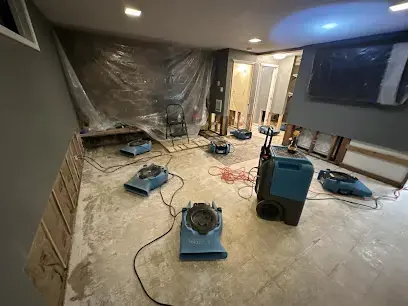
A crew traces the leak, then opens the ceiling where meters show wet drywall. Opening it lets air reach the joist bays, which is where drying happens.
Ceiling leak water damage in Sammamish work follows the water from the stain back to the source. Wet insulation is removed, and the joists and the underside of the subfloor are dried.
- Leak traced from the stain back to the source
- Wet drywall cut out and bagged
- Wet insulation removed
- Joist bays dried with air movers and dehumidifiers
Floors and finishes below
Water that drips from a ceiling lands on carpet, hardwood or tile, and each reacts differently. Carpet and pad can be extracted and dried, while hardwood can cup if moisture sits under it.
Early extraction protects the floors below. Furniture is lifted off wet carpet, and the area is photographed before anything is thrown out.
- Carpet and pad: extracted, and the pad is often replaced.
- Hardwood: checked with a meter and dried before it cups or buckles.
- Tile and vinyl: usually fine, but the subfloor under them can be wet.
Why a dry looking ceiling can still be wet above
Water moves along the top of the ceiling and soaks insulation, which hides the problem from below. The ceiling may look normal while the floor above and the bays between are wet.
Moisture meters and thermal checks show where the water is. Drying then continues until readings match a dry reference.
The structural drying page explains how readings are taken and when the work is done.
Cheap prevention for Sammamish laundry rooms
Washer and ice maker supply hoses are common failure points, and a quick look can catch a bad one. A Sammamish appliance leak response often starts with a hose that was past its time.
A few habits keep a laundry leak from reaching the ceiling below.
- Inspect supply hoses for bulges, cracks or rust at the connections.
- Close the washer valves when away for a long stretch.
- Keep the washer drain hose secured in the standpipe.
- Check under bathroom sinks and around the tub for damp spots.
Questions
Why does a ceiling stain appear after the leak has been going for a while?
Water has to soak through the subfloor, the joist bays and the drywall before a stain shows, so the leak is usually older than the stain.
Can the ceiling be painted over after a leak?
Not until readings show it is dry. Painting over wet drywall hides the problem and can trap moisture.
Where do washer leaks usually start?
Supply hoses that crack or bulge, loose connections at the valves and drain hoses that slip out of the standpipe are common sources.
How is a joist bay dried?
The ceiling is opened where it is wet so air movers and dehumidifiers can reach the cavity, and meters show when it is dry.
Which neighborhoods does this apply to?
The same pattern applies across the plateau. The Sammamish service area page lists the neighborhoods covered.