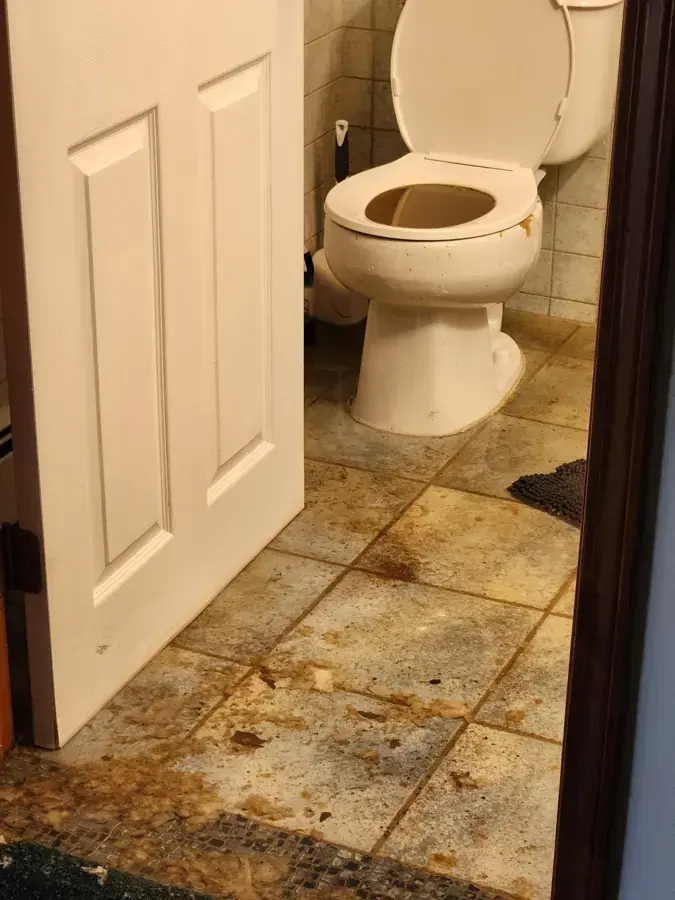
A sewage backup is a Category 3 emergency, and the first question is usually who is responsible for the pipe. The City of Redmond has answered it in its own FAQ, along with what causes most backups. This post uses the city's words to explain wipes, roots, the lateral and the main, and how the cleanup works once sewage is inside the home.
Key takeaways
- The city says most sewer backups are caused by a plugged pipe, and tree roots can also get into the pipe.
- The homeowner maintains the sewer lateral from the home to the city main, and the city maintains the local collection system.
- Redmond recommends not flushing any wipes, even ones labeled flushable.
- It is unlawful in Redmond to plant willow, poplar, cottonwood, soft maple or gum within thirty feet of a sewer.
- Sewage is Category 3, so porous materials are removed and surfaces are cleaned and treated.
What the city says causes backups
Redmond's city FAQ says most sewer backups are caused by a plugged pipe. Tree roots can also infiltrate the pipe and slow it down until it stops.
The city also asks residents not to flush any wipes, even ones labeled flushable. Wipes do not break down like toilet paper and collect in bends.
- Plugged pipe: the most common cause of a backup in the city's own words.
- Roots: small roots enter at joints and then catch paper and wipes.
- Wipes: they snag in the pipe and build a plug over time.
What to do in the first moments
When sewage rises in a tub, shower or floor drain, the instinct is to grab towels and start mopping. That puts contaminated water on skin and spreads it through the house.
A calmer start protects everyone. Stop using water and toilets, keep people and pets away, and note which fixtures backed up.
- Stop using water: every flush and every load of laundry adds to the backup.
- Note the fixtures: the lowest drain in the home usually shows the backup first.
- Open windows if it is safe: this helps the smell clear without spreading contamination.
- Keep records: photos of the affected rooms support the cleanup and any claim.
Mistakes that make a backup worse
A few well meant moves spread the contamination. Knowing them in advance keeps the cleanup smaller.
None of them are about blame. They are what most people try first, and each one can turn a single room into several.
- Mopping with household towels: this spreads sewage across more floor and onto hands.
- Running the washer or dishwasher: every gallon sent down the drain can come back up.
- Using a household vacuum: it blows contaminated droplets into the air.
- Pouring chemical cleaners down the drain: they do not clear a plug of wipes and roots.
Who fixes which pipe
The city maintains the local sewage collection system, and King County is the regional provider of wastewater treatment and disposal.
Per the city FAQ, the homeowner is responsible for maintaining the sewer lateral, the pipe from the home to the city main. That split is why a backup can have two answers: a problem in the lateral is the owner's, and a problem in the main belongs to the city.
Signs the problem is in the lateral
A single home backing up while neighbors are fine usually points toward the lateral.
- Only one drain or one home is affected
- Slow drains that clear and then return
- Gurgling at a fixture after another one is used
Signs the problem is in the main
Several homes backing up together suggest the main, which is the city's to address.
- Neighbors report the same problem
- Several fixtures back up at once
- The backup follows a wet spell
The tree rule and what roots do
It is unlawful in Redmond to plant willow, poplar, cottonwood, soft maple or gum trees within thirty feet of a public or private sewer. Those species send thirsty roots toward any pipe that carries moisture.
A plumber can scope a lateral to see roots or a break before a backup happens. Fixing the pipe is the plumber's job, while the cleanup is the restoration crew's.
The two jobs run side by side. The pipe has to be cleared or repaired so the backup does not come back, and the crew handles what the backup left on floors and walls.
Why sewage means containment
Sewage is Category 3 water, the most contaminated class. It carries bacteria and viruses that can make people sick.
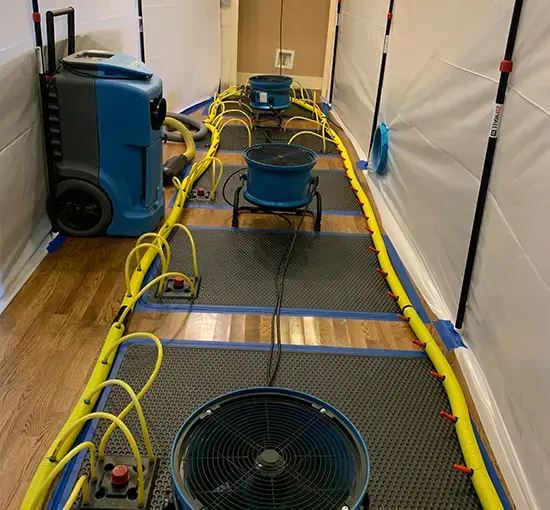
The first step is to keep people and pets out. A sewage backup cleanup in Redmond starts with containment so the contamination does not spread to clean rooms.
- Keep out: children, pets and anyone with a health condition should stay away.
- Do not flush or run water: this can push more sewage out of the drain.
- Do not use a household vacuum: it spreads contaminated droplets through the home.
- Photograph first: record the damage before any cleanup begins.
What porous material comes out
Porous materials that touched sewage cannot be fully cleaned and are removed. Hard surfaces can be cleaned, treated and dried.
The crew works in protective gear and bags wet material for disposal. Air scrubbers with HEPA filters clean the air while work is under way.
- Carpet and pad
- Drywall and insulation that wicked the water
- Upholstered furniture and soft goods
- Cardboard and paper storage
Drying and preventing the next backup
After removal, surfaces are cleaned and treated, and the structure is dried with air movers and dehumidifiers. Readings from moisture meters show when the framing is back to normal.
Prevention is mostly habits. Flush toilet paper only, keep grease out of drains and watch what is planted over the sewer.
For a Redmond home, Redmond water damage services are listed on the town page, and the main sewage backup page shows how the work is organized.
- Flush only toilet paper, never wipes
- Keep grease and cooking oil out of drains
- Avoid planting thirsty trees near the sewer
- Ask a plumber to scope the lateral if backups repeat
Records, insurance and who to tell
Many policies treat a sewer backup differently from other water losses, so reading the wording early saves surprises. An agent can say whether a backup endorsement applies.
Photos, receipts and a list of discarded items make the claim easier. Keep a sample of damaged flooring if the adjuster asks for one.
- Tell the insurance company early.
- Keep receipts for the plumber and the cleanup.
- List every discarded item with a rough age.
- Ask the plumber for a written note on what was found in the pipe.
Questions
Who is responsible for the sewer lateral in Redmond?
Per the city FAQ, the homeowner is responsible for maintaining the sewer lateral from the home to the city main.
What causes most sewer backups in Redmond?
The city says most backups are caused by a plugged pipe, and tree roots can also infiltrate the pipe.
Are flushable wipes safe to flush?
The city recommends not flushing any wipes, even ones labeled flushable.
Can sewage backup damage be cleaned by the homeowner?
Sewage is Category 3 water, so porous materials are removed and surfaces are treated by a crew with protective gear.
What does the water treatment side of the system involve?
King County is the regional provider of wastewater treatment and disposal, while the city maintains the local collection system.