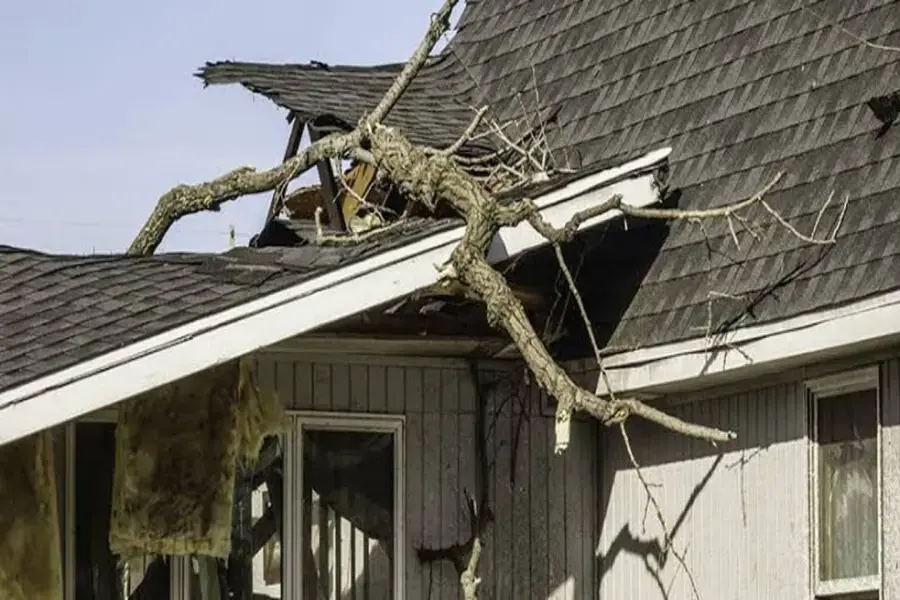
The November 2024 windstorm was called one of the most damaging in decades by the Kirkland city manager. It dropped trees on homes and vehicles and caused multi day power outages. For a house with a hole in the roof, the wind was only the first problem, because the next rain came straight through. This post follows that path from the tarp to the ceiling below.
Key takeaways
- A tree on a roof is a safety job first, and the roof is not a place for a homeowner to climb.
- Rain through a storm opening wets attic insulation, ceiling drywall and the framing between them.
- Multi day outages slow drying, so wet material comes out first and drying starts when power allows.
- The city advises residents to clear drains, check gutters and test sump pumps before storms.
- Photos taken before cleanup support the insurance claim.
What the November 2024 windstorm did to Kirkland
The city manager called the November 2024 windstorm one of the most damaging in decades. Trees fell on homes and vehicles, and power was out for several days.
A fallen tree can crush shingles, split roof framing and open the sheathing to the sky. The hole may look small from the ground and still let in a lot of rain.
- Trees on homes and vehicles across the city
- Multi day power outages that delayed repairs
- Roof openings that let rain into attics and ceilings
First steps when a tree opens the roof
Stay off the roof. A damaged roof can give way, and a tree resting on it can shift.
Move people and pets away from rooms under the damage, and photograph the roof, the tree and any visible water from the ground.
- Keep out of rooms under the damage.
- Photograph from the ground, not from the roof.
- Move valuables away from wet ceilings if it is safe.
- Ask for emergency tarping so rain stops entering the opening.
Tarps and temporary protection
A tarp is a short term fix. It keeps rain out of the opening while repairs are arranged, but it does not dry anything that is already wet.
The tarp should be fastened to sound framing and run over the ridge so water sheds off both sides. A poorly placed tarp can funnel water into the attic instead of away from it.
Where the rain goes once it gets in
Water that enters at the roof first soaks the attic insulation. Wet insulation holds water against the ceiling drywall for a long time.
From there it can stain or sag the ceiling and run down inside wall cavities. A roof leak water damage response in Kirkland follows that path to find every wet area.
In the attic
Wet insulation is heavy and does not dry well in place, so it is removed.
- Insulation batts or blown fiber removed
- Wet sheathing checked with a meter
- Framing members dried
In the rooms below
Ceilings and walls under the opening can hold water without showing much.
- Ceiling drywall opened where it is wet
- Light fixtures and fans checked for water
- Wall cavities tested at several points
What a tree strike does to the roof structure
A tree can bend rafters, crack trusses and push shingles into the attic. Even if the roof looks mostly whole, the sheathing under the shingles may be torn.
That is why water can show up in a room far from where the tree landed. Rain follows the framing down to the lowest spot.
- Broken or bent rafters and trusses
- Torn sheathing under intact looking shingles
- Flashing pulled loose around chimneys and vents
- Gutters bent or pulled away from the fascia
Downed trees, power and who to call first
A tree on a house often brings wires with it. Anything that looks like a downed wire is treated as live, and the utility is the one to call.
Only after the area is safe does the roof become a restoration question. A crew can then tarp the opening and begin removing what the rain soaked.
- Stay well away from wires on or near the tree.
- Call the utility and emergency services before anyone enters a damaged room.
- Wait for the all clear before a crew works on the roof.
- Keep children and pets out of the affected rooms.
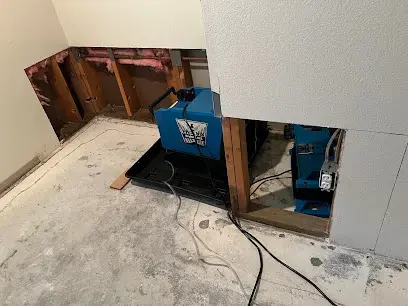
Drying when the power is out
Drying equipment needs electricity, so a long outage changes the plan. The crew focuses on removal first, because wet materials left in place only get wetter.
Once power returns, air movers and dehumidifiers go in and run until readings match a dry reference. Ceiling leak water damage in Kirkland work then closes out the rooms below.
- Remove wet insulation and drywall while power is out.
- Photograph each wet area before it is opened.
- Start drying equipment as soon as power returns.
- Check framing readings before any wall is closed.
Wet materials left in place
When wet insulation and drywall stay in place for several days, they begin to smell and can start to grow mold. Quick removal protects the framing and the air in the house.
Even a short outage is long enough for that to start, so removal is the first priority when drying equipment cannot run.
Gutters, drains and sump pumps before the next storm
The city says local flooding comes mainly from stormwater runoff off hard surfaces like roads and rooftops. It asks residents to clear drains, check gutters and test sump pumps before storms.
Gutters matter after a tree strike too. Debris can block them, and a blocked gutter sends water over the edge and down the wall.
- Clear storm drain grates near the home.
- Check gutters for debris and loose sections.
- Test the sump pump if the home has one.
Records and the repair that follows
A claim after a storm goes better with good records. Photos of the roof, the tree, the wet ceilings and the removed materials give an adjuster a clear picture.
Roof repair itself is a separate trade. The Kirkland structural drying page explains the drying side, and the main roof leak page shows how the work fits together.
- Keep photos of the roof, tree and ceilings.
- Save receipts for tarping and cleanup.
- Keep wet samples if an adjuster asks for them.
Questions
How did the November 2024 windstorm affect Kirkland?
The city manager called it one of the most damaging in decades. Trees fell on homes and vehicles, and power was out for several days.
Should a homeowner climb on a damaged roof?
No. A damaged roof can give way, and a fallen tree can shift. Photograph from the ground and ask for emergency tarping.
What happens to attic insulation after a storm leak?
Wet insulation holds water against the ceiling and does not dry well in place, so it is usually removed.
Can drying start when the power is out?
Removal can start, but air movers and dehumidifiers need electricity, so drying equipment goes in when power returns.
What does the city ask residents to do before storms?
The city asks residents to clear drains, check gutters and test sump pumps.